
Always Have an Alternate: The Plan B Pilots Never Fly Without
No pilot takes off without a backup airport — it's the law. A named Plan B turns a crisis into a decision. How to carry an alternate through your own life.
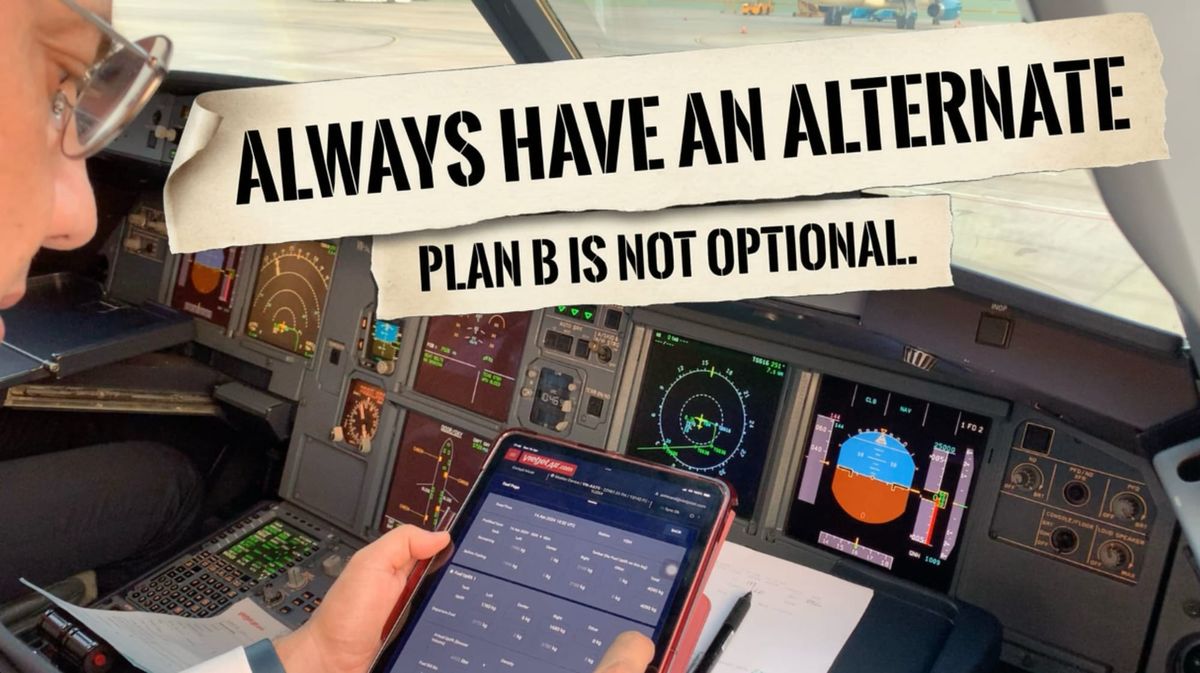
💭 No pilot ever takes off without somewhere else to land. Not as a backup plan — as a legal requirement.
Aviation made the backup the law
✈️ Every flight carries fuel for:
- the destination
- plus one or two alternate airports
- plus reserves.
Always. Not optional, it's the law. Because destinations fail: weather closes in, a runway gets blocked, an emergency shuts the airspace. Without an alternate, a committed destination at 41,000 feet is a terrible place to be. — 🔗 read more about my landing assessment into Kuwait City, runway 34.
You plan your life with no alternate
🎯 Most people run their whole life on a single point of failure: one job, one income, one relationship, one city, one plan. When it works, it looks efficient. When it fails, it's a catastrophe. You never built an alternate, because losing the primary felt unthinkable. That's the gap.
✅ So name your alternates, the way we file ours before takeoff.
- If the job ends, what's your next 90 days?
- If the income stops, what's the backup?
- If the childcare falls through, who do you call?
You don't have to fly to the alternate. You just have to know it's there. — 🔗 read more.
Do not mistake optionality for pessimism
🚫 One more layer between you and a bad day. — 🔗 read more. A pilot with somewhere else to land flies the main approach better, because the backup takes the desperation out of the decision.
☝🏼 We carry an alternate because having one is vital. Your stakes feel smaller, so you fly committed. Borrow ours: the moment you know the alternate exists, your nervous system relaxes, and you decide from calm instead of fear.