In Defence of the Good Follower
The whole market sells leadership; almost no one defends following. But a good follower keeps the leader honest — and in a cockpit, that's the difference between a safe flight and a smoking hole.
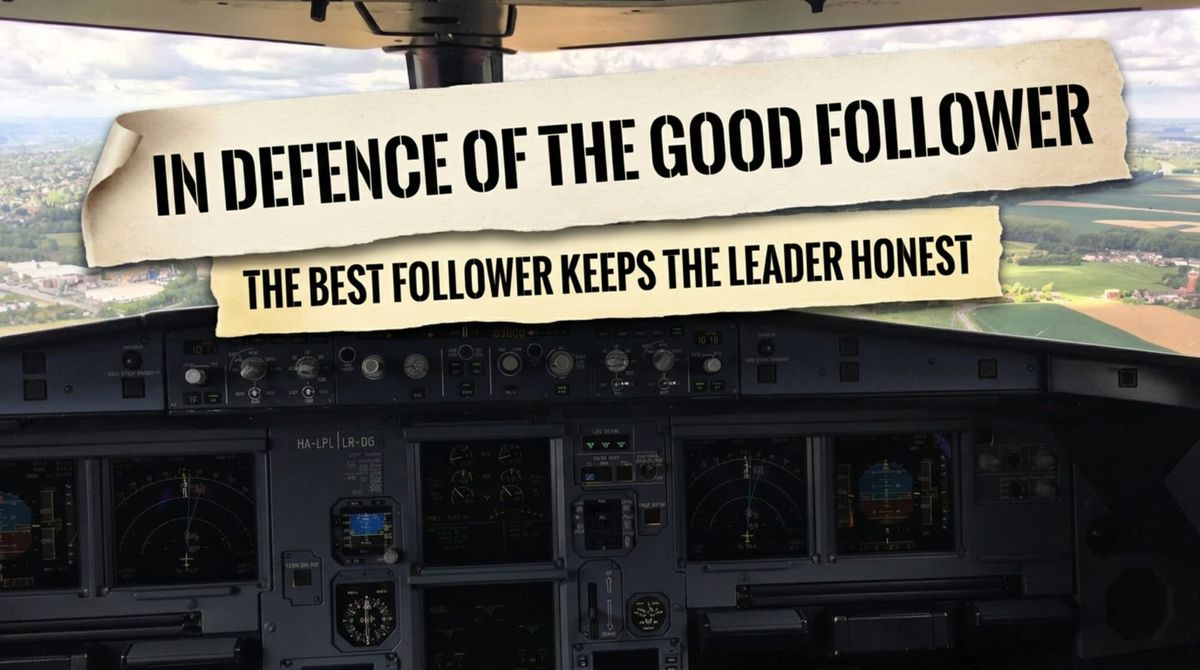
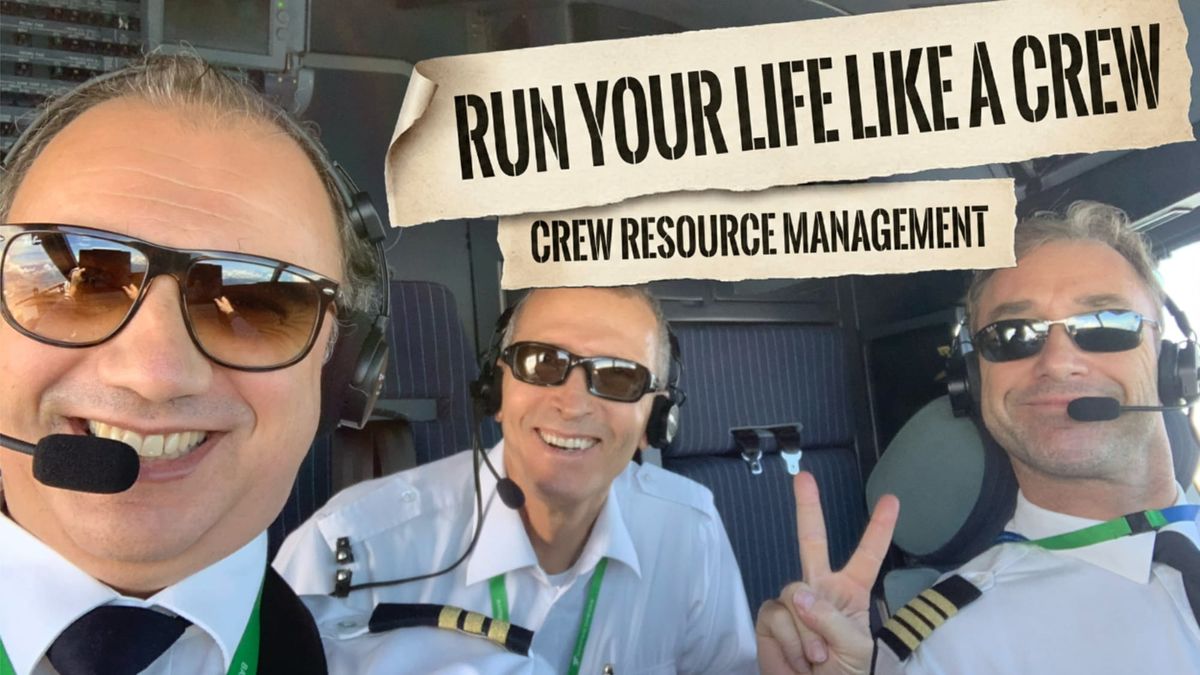
💭 A cockpit is not a democracy. It runs on a system: the Captain holds the responsibility, thus the authority, while the crew's job is to reinforce it and maintain the standards.
Aviation made the follower a safety system
✈️ We call it the "chain of command" — the Captain is the first link, no higher rank in the aircraft. But make no mistake: the First Officer is there to assist the Captain, and also to watch, cross-check, read back, challenge any deviation, and take over in extreme cases. Silence kills. Aviation trains followership as hard as command. — 🔗 read more
🎯 The rest of the world got the opposite lesson. Ten thousand books sell leadership; almost nothing on the art of followership. We're taught that to follow is to obey, to go along, to refrain from giving an opinion. So the good ones stay quiet, and the operation drifts toward the rocks while everyone watches.
You were taught that following means obeying
✅ A good follower is not a yes-man. They monitor the plan, voice the doubt, close the loop, and hold the line when the leader needs it most. That isn't insubordination — it's the system working. Flattening the gradient maintains command authority and protects the operation. — 🔗 read more
🚫 Good followers survive a bad leader. Bad followers grind a good leader to zero. The team that catches its own errors beats the autocratic boss every time.
☝🏼 Aviation made the follower a guardian because a passive co-pilot is fatal. Your stakes feel smaller, so you mistake compliance for teamwork and silence for respect. Borrow the rule: the best follower isn't the most obedient — it's the one who keeps the leader honest.
 Olivier Rouchard
 Olivier Rouchard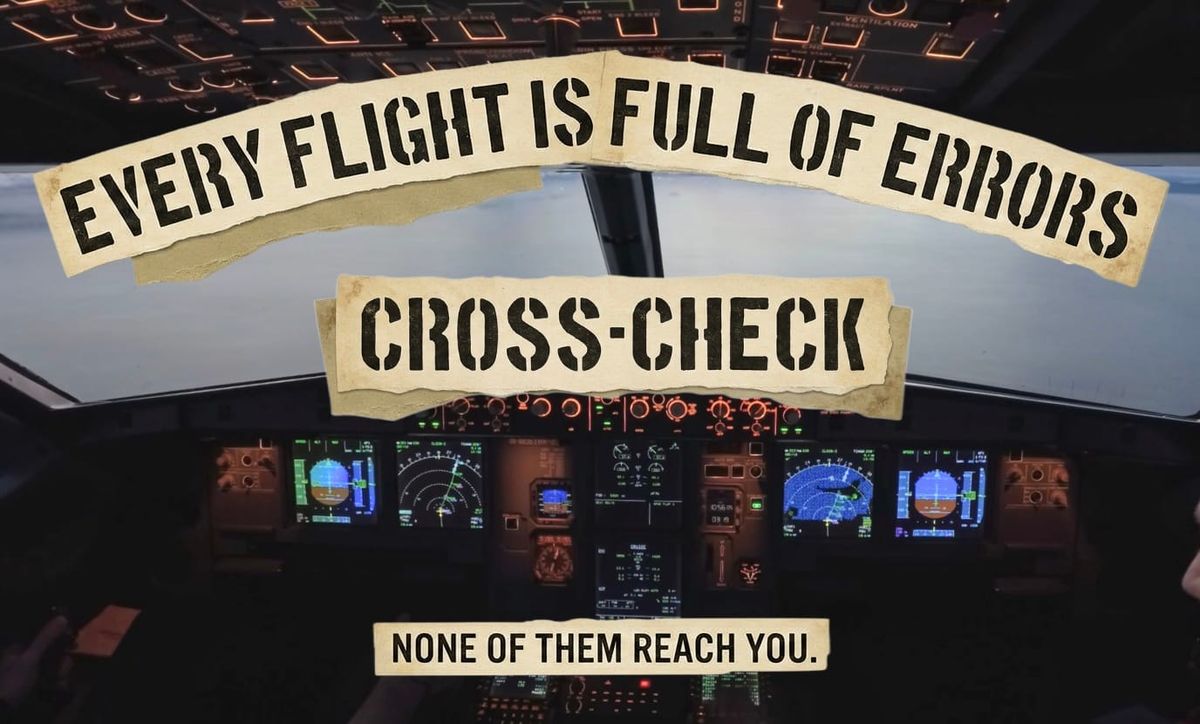
 Olivier Rouchard