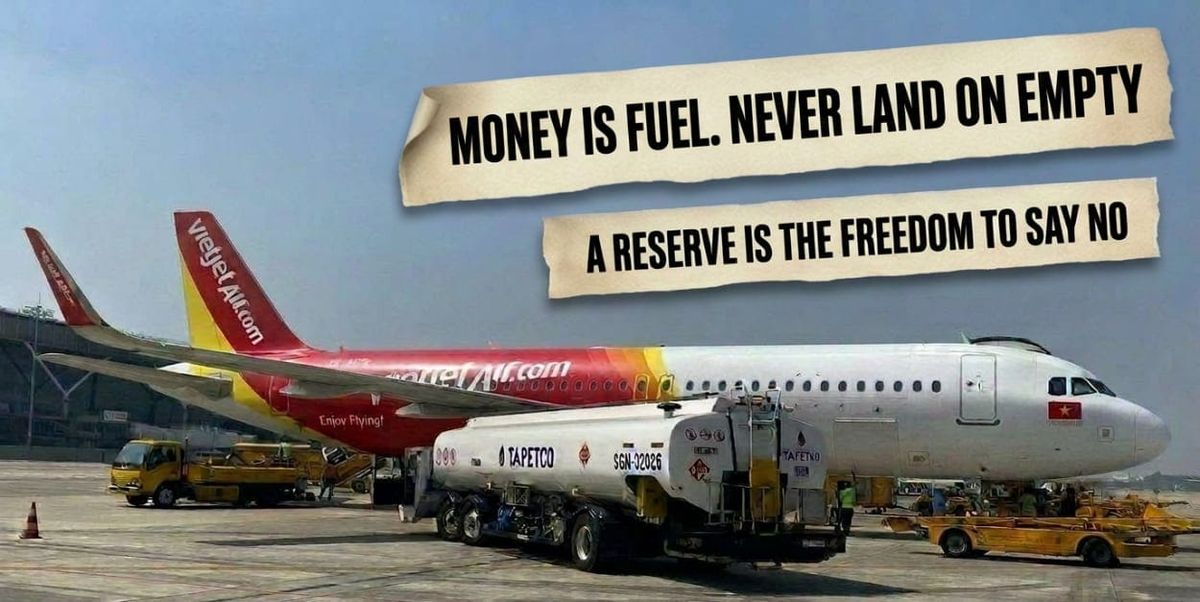
Money Is Like Fuel. Never Land on Empty.
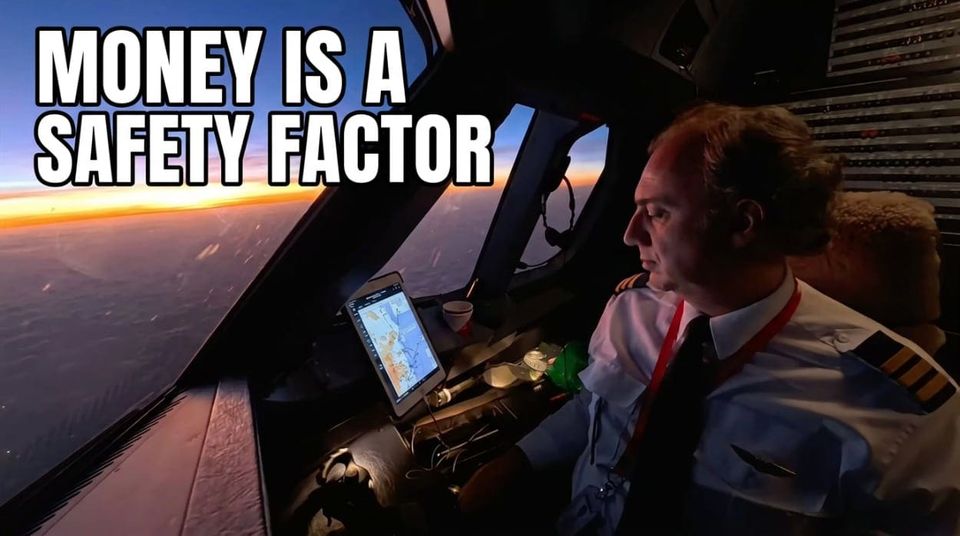
Pilots never plan to land with an empty tank. It isn't about the fuel — it's about options. Your emergency fund runs on exactly the same math.
💭 When people budget to the last euro, they call it efficient. A pilot would call it something else: flying without options. It's easy to say and I have also been guilty as charged when it comes to budgeting — but somehow, never when it comes to flying.
Aviation never plans to land on empty — it's the law
✈️ Every flight leaves with fuel in layers:
- trip fuel to reach the destination
- contingency for the unforeseen — weather, a longer routing
- alternate fuel to reach a second airport if the first one closes
- final reserve — extra flying time that we are never permitted to touch.
We never get dispatched without all of it. It's the law. — 🔗 read more
🎯 Money is loaded the same way, or it isn't. The salary covers the trip. But the contingency, the alternate, the untouchable reserve? Most people fly without any of them, then call the empty tank discipline.
Budgeting to zero isn't efficiency
✅ So build the layers. A contingency for the small surprises that aren't emergencies. An alternate: enough to reach a different destination — a new job, a new city, a way out. And a final reserve you never spend, not even for a good reason.
🚫 The trap is believing the reserve is money doing nothing. It isn't idle. I just cannot imagine landing a flight with 350 passengers and thinking I don't have the option to go around if needed.
☝🏼 Low fuel doesn't only mean less fuel. It means fewer options — and the pilot who can no longer divert will accept an approach he should have refused. Money works exactly like that. A reserve isn't savings you might one day spend. It's the freedom to say no.
 Olivier Rouchard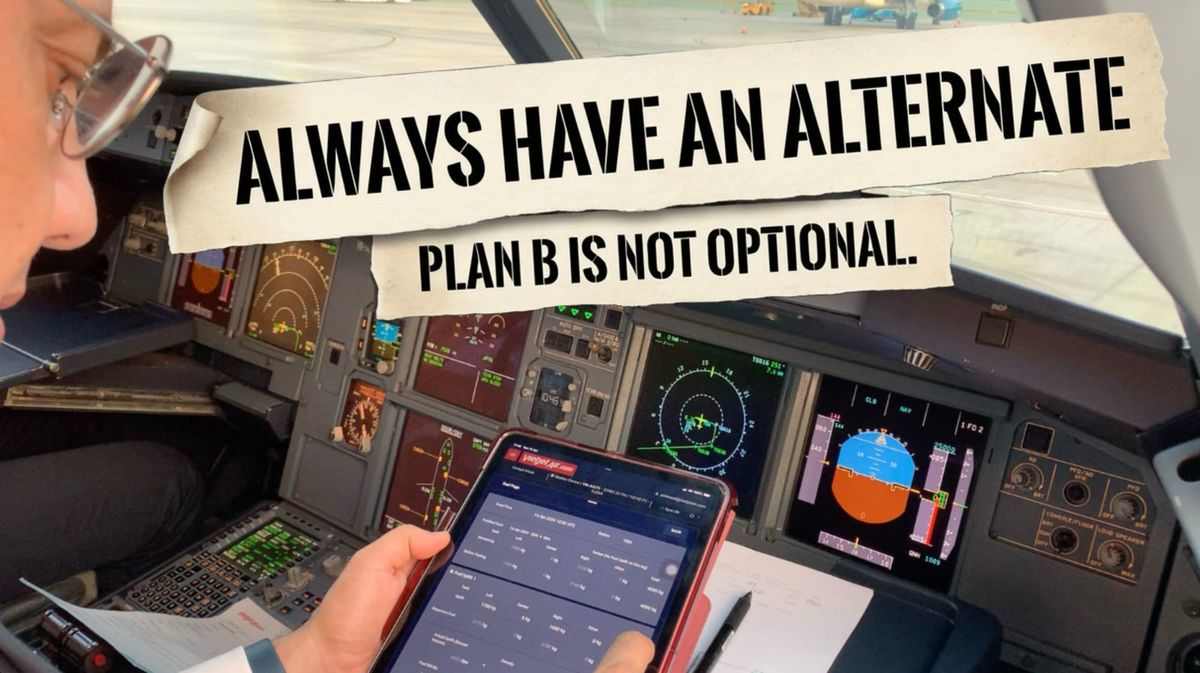
 Olivier Rouchard