Currency vs Proficiency: Legal to Fly Isn't the Same as Good
Legal to fly isn't the same as good. The quiet, dangerous gap between ticking the boxes and actually being sharp — in the cockpit and your craft.
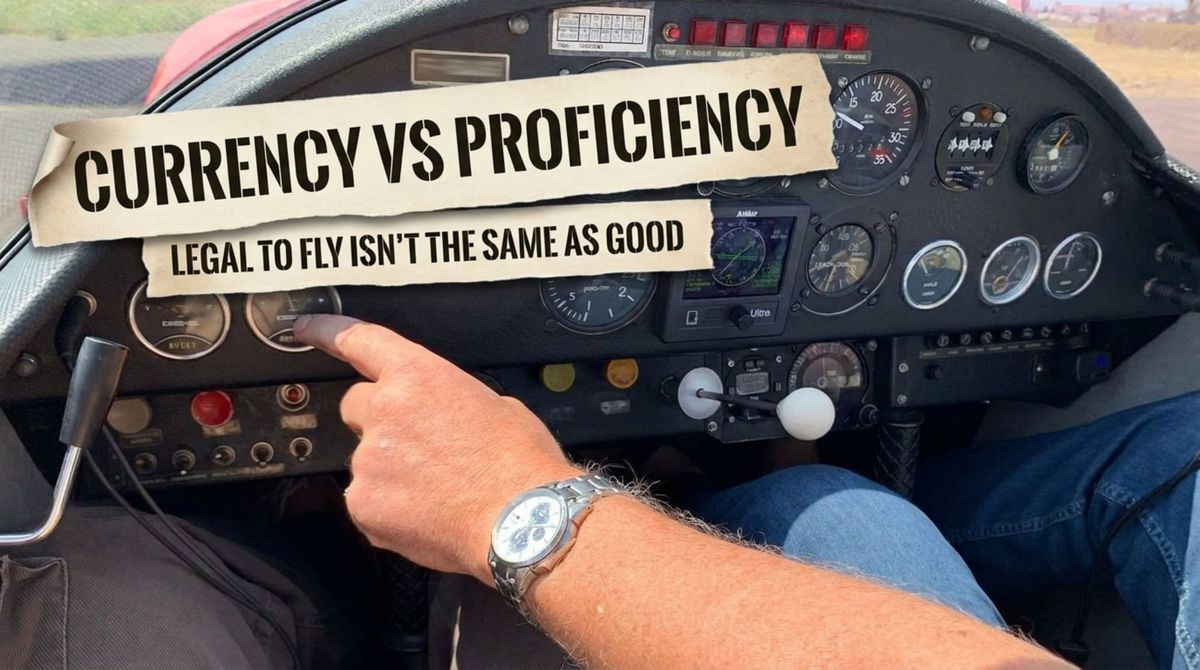
💭 Everyone assumes the airliner is the hard part to fly. It isn't — a small plane is far harder, and that gap is the whole lesson.
Aviation separates the two on purpose
✈️ Currency means you've done it recently:
- ☑️ enough takeoffs and landings
- ☑️ enough hours
- ☑️ sim sessions and checks inside the window.
It's a box ticked, and it's automatic.
Proficiency means you're actually good. The jet's automation can keep you current while your raw flying quietly fades, so pilots go back to small, hand-flown aeroplanes to rebuild what the shiny machine hides. — 🔗 read more
You confuse them too
🎯 The rest of the world mixes these up constantly.
- twenty years married, still communicating badly
- fifteen years in the role, leadership still weak
- a decade running, technique still broken.
Time on task buys currency. It never buys proficiency.
✅ Proficiency is a choice: deliberate practice with, most importantly, honest feedback. And the humility to keep learning after you're "qualified." — 🔗 read more
So find the one place you're coasting:
- the same five dishes after twenty years
- leading without ever studying it.
Rebuild the skill, one at a time.
🚫 Currency is automatic; proficiency decays the moment you stop choosing it. The danger isn't being bad. It's being qualified, current, and slowly getting worse without noticing.
☝🏼 We go back to the small plane because the automation can't save us there. It makes us fly. Your stakes feel smaller, so you let the autopilot of habit fly your craft. Borrow the discipline: pick one skill, switch off the automation, and hand-fly it until you're proficient again, not just current.