What Could Go Wrong Today? Ask Like a Pilot.
Most bad days don't ambush you — they warn you first. Threat and Error Management is the pilot's habit for naming the threat (and the error) before it bites.
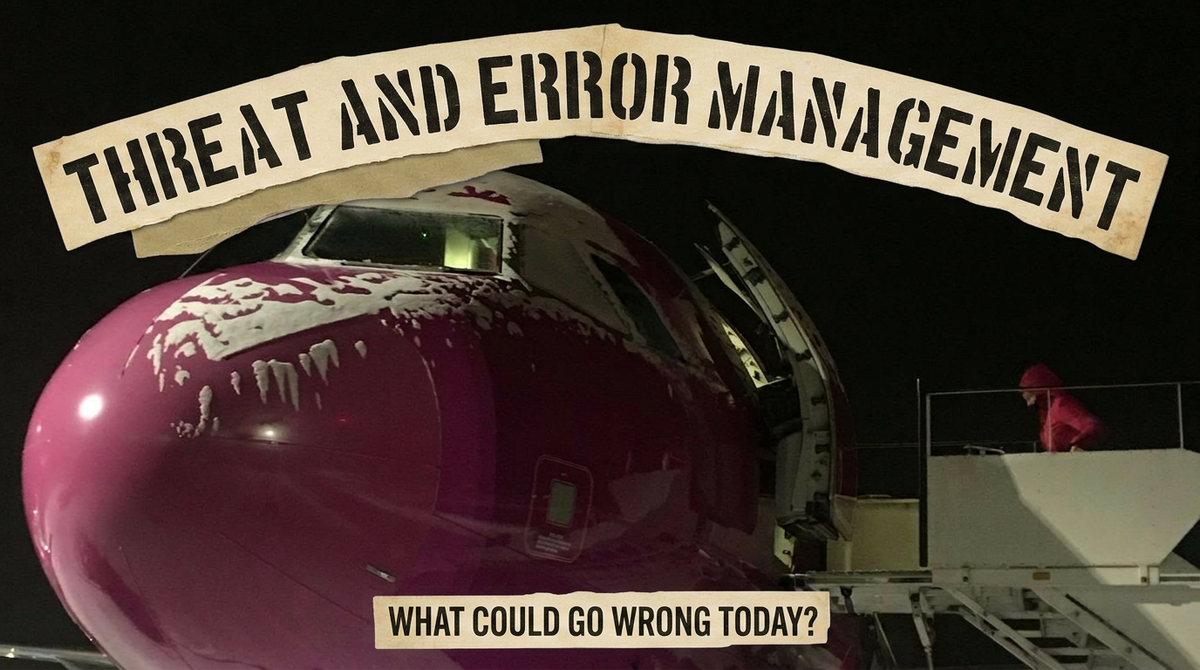
💭 Most bad days don't ambush you.
They send warnings hours ahead: a short night's sleep, a packed calendar, a plan with no margin. You feel the unease but never name it — so it sits there, stacking the deck against you.
Pilots do the opposite: we name the trouble first.
We hunt threats before they happen
✈️ A threat is anything outside your control that could escalate: weather, a short runway, a tired crew.
In cruise, approaching Kuwait — not even our destination — we still run it out loud:
- Name it. PM(1): "Exit taxiway closed for runway 34 at Kuwait."
- Plan it. PF(2): "Compute the landing performance; we're still heavy."
- Face it. PM: "V5 works, but the brakes will cook."
- Own it. PF: "Then we vacate later, at V8."
We were ready anyway.
That habit has a name: Threat and Error Management — aviation's operating system.
Name yours in the first ten minutes
🎯 Your day has threats too, most nameable before coffee:
- Five hours of sleep.
- Two hard meetings, back to back.
- A child who might come home sick.
Name each out loud, then operate as if it's real: shorten the meetings, arrange a backup pickup, eat before the dip.
✅ Some threats become errors anyway — a mis-keyed entry, a snapped reply. That's the error half of the name. Manage it the pilot way: name it, correct it, move on. Hiding a small mistake is how it grows into a big one.
🚫 The danger isn't the closed taxiway or the missed nap. It's acting as if the runway were clear when it isn't.
☝🏼 You can't empty the sky of threats. You can name them before they line up.
(1): Pilot Monitoring - (2): Pilot Flying.