How to "Hand Off" Anything in 30 Seconds
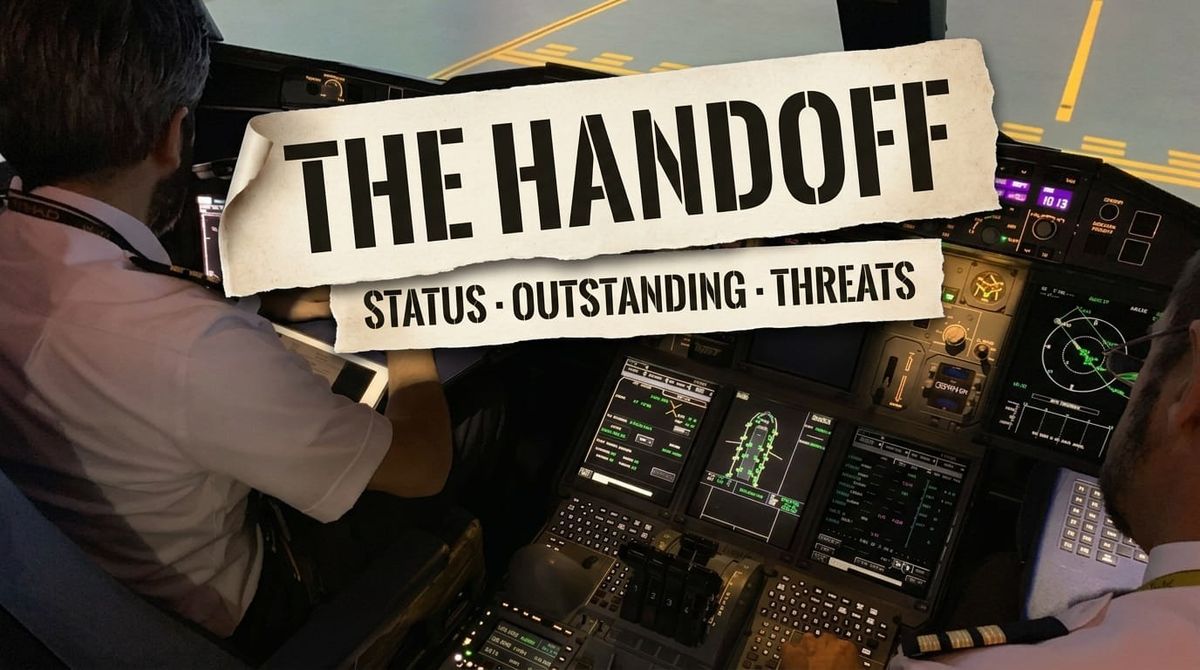
A dropped ball is almost never a skill failure — it's a handoff that never happened. The 30-second briefing pilots use: status, outstanding, threats.
💭 "She ate at 12:30, naps at 13:30, and she's teething." That short sentence saved the whole evening. Here's how we do it in aviation.
Nothing gets assumed
✈️ At the end of a duty, pilots don't just walk away. The aircraft passes to the engineers, the next crew, and every defect or open item goes into the log. Nothing is left to memory. A bad handoff is a time bomb: the next crew inherits a problem they can't see.
A clean handoff has three parts:
- Status: where things stand right now.
- Outstanding: what still needs attention.
- Threats: what might bite the next shift.
👶 It's 16:30, the nanny hands her over, and the whole day fits in three lines.
- She ate at 12:30, napped at 13:30, and she's happy right now.
- Next bottle around 17:00, plus a dab of teething gel.
- She's teething, so expect extra tears tonight, maybe a slight fever.
Thirty seconds, and your evening has no surprises.
Your turn at the door
🎯 You hand things off all day: leaving work, swapping the nurse shift, passing a project to a colleague. Most people do it terribly. They walk out, or say "she already ate" and nothing else, and the next person inherits the invisible problem.
✅ So give them the thirty seconds. Status, outstanding, threats: "Report's at draft, the client is expecting delivery by Thursday, and the new hire still has no access." Done.
🚫 Don't assume they'll figure it out. A dropped ball is almost never a skill failure; it's a handoff that never happened.
☝🏼 A good handoff costs seconds. It's an act of respect for whoever comes next, and the operation stays strong. Most importantly, in aviation, we keep the next crew and passengers alive.